Kamerun
An overview
Cameroon, officially the Republic of Cameroon, is located in west-central Africa. It shares borders with Nigeria to the west, Chad to the northeast, the Central African Republic to the east, and Equatorial Guinea, Gabon, and the Republic of the Congo to the south. Its coastline lies along the Bight of Bonny, part of the Gulf of Guinea and the Atlantic Ocean.
Thanks to its remarkable geographical, ecological, and cultural diversity, Cameroon is often referred to as "Africa in Miniature."
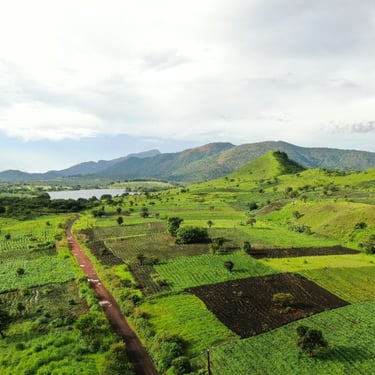
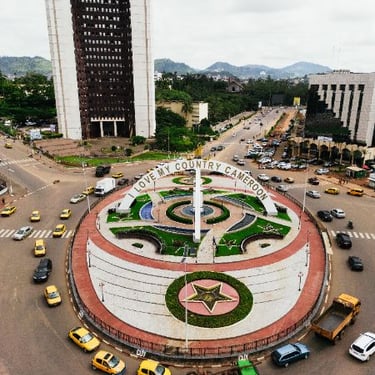
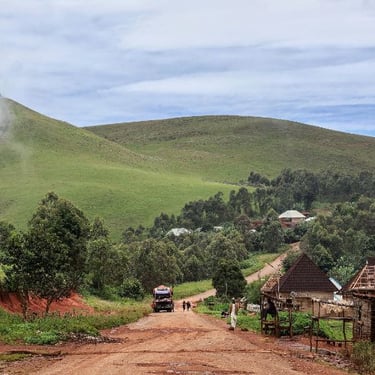
The country is home to an extraordinary variety of landscapes, including beaches, deserts, mountains, tropical rainforests, and savannas. Its highest peak is Mount Cameroon in the southwest, while its largest cities are Douala, Yaoundé, and Garoua.
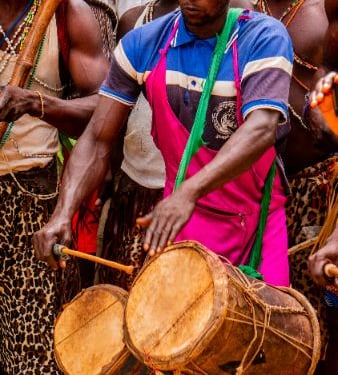
Cameroon is one of Africa's most culturally diverse nations, with more than 200 ethnic and linguistic groups. It is also internationally known for its traditional music styles—especially Makossa and Bikutsi—as well as its successful national football team.
The country's official languages are French and English.
History and colonial era
Among the earliest known inhabitants of present-day Cameroon were the Sao civilization around Lake Chad and the Baka hunter-gatherers living in the southeastern rainforest.
Portuguese explorers reached the coast during the 15th century and named the region Rio dos Camarões ("River of Shrimps"), from which the country's modern name is derived. During the 19th century, the Adamawa Emirate was established in the north by Fulani rulers, while numerous traditional kingdoms (Fondoms) flourished in western and northwestern Cameroon.
In 1884, Cameroon became a German colony. Following the First World War, the territory was divided between France and Great Britain under a League of Nations mandate.
The Union des Populations du Cameroun (UPC) campaigned for independence but was banned by the French authorities during the 1950s. Armed conflict continued until 1971.
French-administered Cameroon gained independence in 1960 under President Ahmadou Ahidjo.
In 1961, the southern part of British Cameroon joined the newly independent state, forming the Federal Republic of Cameroon.
The country became the United Republic of Cameroon in 1972 and adopted its current name, the Republic of Cameroon, in 1984.
Economy and current political situation
Compared with many other African countries, Cameroon has long enjoyed a relatively high degree of political and social stability. This has supported the development of agriculture, transport infrastructure, and important industries such as oil and timber.
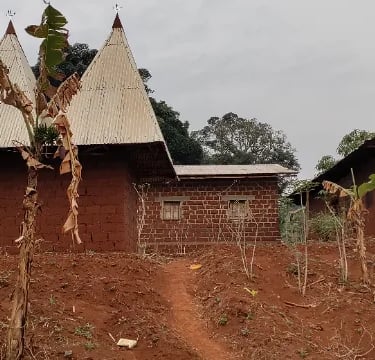
Despite these advantages, a significant share of the population continues to rely on subsistence farming and lives under challenging economic conditions.
Since 1982, the country has been governed by President Paul Biya and his political party, the Cameroon People's Democratic Movement (CPDM).
In recent years, tensions have increased in the English-speaking regions of Cameroon, where many people have called for greater decentralization or increased regional autonomy.
Source: https://www.prc.cm/en/cameroon/50-country-information
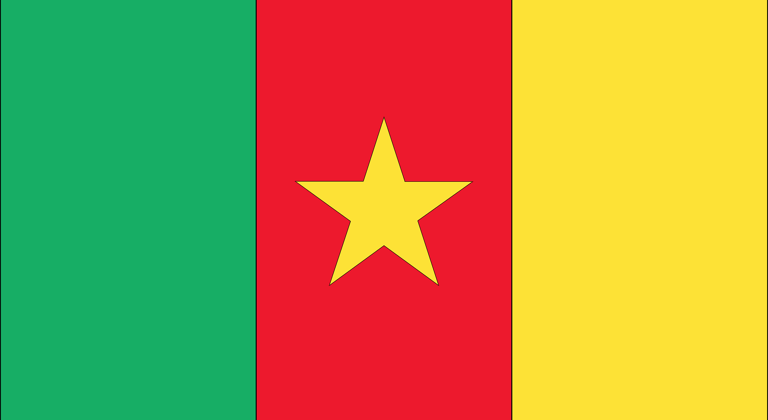
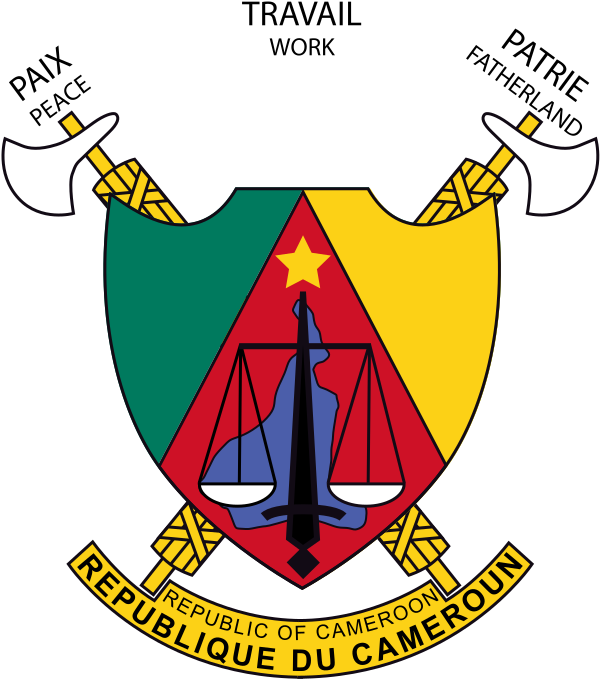
Auteur inconnu Vecteur : Connormah — From Brands of the World.com, Domaine public, https://commons.wikimedia.org/w/index.php?curid=6913754


Donate
Think & Act differently e.V.
IBAN: DE77 8306 5408 0105 2075 76
BIC: GENODEF1SLR
Bank: Deutsche Skatbank
Reference: Project name* or General, followed by your postal address.
*Please specify one of our projects (project name) or "General". This helps us allocate your donation correctly.
Important Links
Contact Information
Contact
Privacy Policy
Legal Notice


Phone:
+49 176 76 23 70 08


E-Mail:
info@thinkandactdifferently.org